
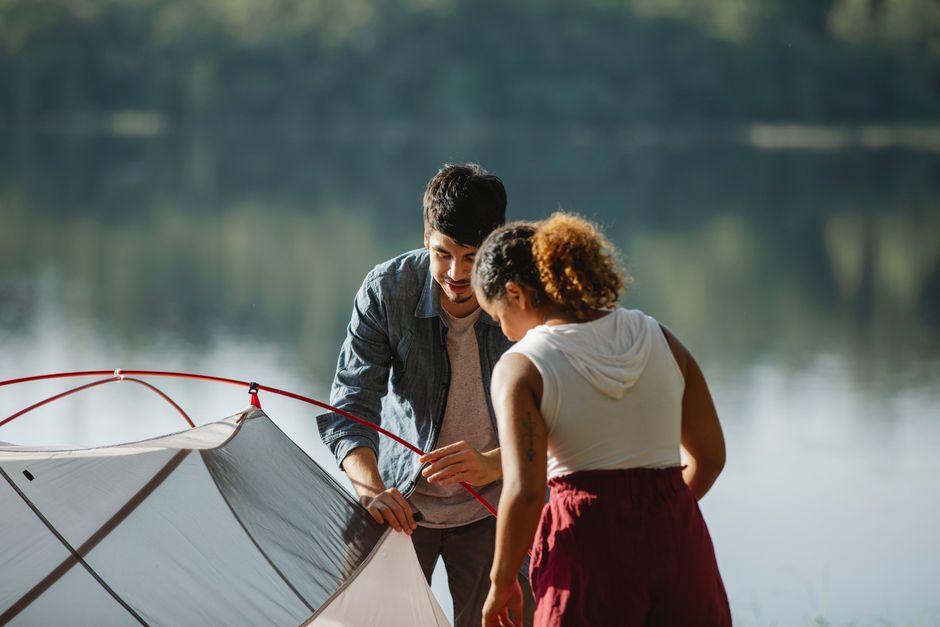
Will your children stay warm and dry through a cold night, a wet tent, and the inevitable puddle fight? Yes, if you manage heat, moisture, and clothing as separate problems. Autumn camping does not require a huge gear bill, but it does punish thin sleeping pads, poor campsite drainage, and cotton clothes that stay wet for hours.
Why autumn camping feels colder than the forecast
The forecast may say 50°F, yet a child can feel chilled before bedtime. Air temperature is only one part of the problem. Wind pulls heat from exposed skin, damp fabric conducts heat away from the body, and the ground can drain warmth faster than the air. Children also lose heat faster because they have smaller bodies and may not explain that they are cold until they are already uncomfortable.
Cold comes from three directions
Think in three layers of exposure: air above, ground below, and moisture around the body. A clear sky can create a cold night even after a mild afternoon because the ground releases heat quickly after sunset. Wind makes a mild campsite feel much colder, especially beside an open field or near a lake. A tent blocks some wind, but its fabric does not create heat.
Moisture turns a small mistake into a bad night
Wet socks, sweaty base layers, and condensation inside the tent all create the same problem: water moves heat away from skin. Cotton is the common failure point because it absorbs sweat and dries slowly. Keep one complete dry sleep outfit for each child, sealed in a waterproof bag until bedtime. Do not use that outfit for dinner, exploring, or marshmallow duty.
Verdict: Treat the ground and moisture before buying heavier clothing. A dry child on an insulated pad will usually sleep better than a heavily dressed child lying on a cold air mattress.
How to choose a campsite that stays dry
Choose the higher, flatter site with nearby shelter, even if it has a less exciting view. A campsite that looks level can collect water overnight, while a gentle rise can drain quickly after rain. The best family site is not the most scenic one; it is the site that gives children a dry path to the toilet, enough room for wet gear, and protection from the strongest wind.
Read the ground before pitching
Walk the site slowly and look for dark soil, flattened grass, channels, exposed roots, and leaves packed into shallow dips. Those marks show where water has moved before. Avoid the lowest point between trees, the outside edge of a bend in a stream, and ground directly beneath dead branches. A small slope is acceptable, but sleep with heads higher than feet only if the slope is gentle enough to prevent sliding.
Check drainage, wind, and family logistics
Set the tent door away from the prevailing wind and place the rainfly so water runs clear of the entrance. Leave a covered space for muddy shoes and a dry space for pajamas. If the site has no toilets, no safe drinking-water point, or no fast route back to the car, it may be a poor choice for young children in heavy rain. Bottom Line: Site selection is free insulation and free rain protection, so use it before spending money on more equipment.
What kids should wear and sleep on
Use a simple system: dry base layer, insulating middle layer, weatherproof outer layer, then a sleeping setup that blocks ground chill. Do not dress a child in every layer inside a sleeping bag. Overheating creates sweat, and sweat makes the next cold spell worse.
Build the clothing system in this order
- Base layer: Choose wool or synthetic underwear, leggings, and a long-sleeve top. Pack two sets per child for a one-night trip.
- Insulation: Add fleece or a light puffy jacket after sunset. A fleece layer is easier to dry than a thick cotton sweatshirt.
- Outer shell: Use a waterproof jacket and rain pants during wet play. The Columbia Watertight II is a packable, fully seam-sealed rain shell, but any shell should cover the waist and close around the wrists.
- Feet: Keep dry socks for sleeping. Oaki Ultra-Light Rain Boots suit muddy camp chores, but boots still need dry socks and should not go inside the sleeping bag.
- Head and hands: Add a warm hat and thin gloves when temperatures fall below 50°F. Check for dampness rather than adding layers by guesswork.
Insulate the sleeper from below
A sleeping bag cannot replace a sleeping pad. The REI Co-op Trailmade 20 has a listed temperature rating around 21°F, but that rating assumes a suitable insulated pad and a dry sleeper. The Therm-a-Rest Z Lite Sol has an R-value of 2.0 and packs to roughly 20 by 5 by 5.5 inches, making it useful as a reliable foam layer or a backup under another pad. The Coleman Sundome 6-Person tent has a 10 by 10-foot floor and a 6-foot center height, but its size does not make it warm by itself.
Best setup for most families: use a pad under every body, keep sleep clothes dry, and add a blanket over the bag only after checking that the child is not sweating.
Rain-day questions parents ask before bedtime
Rain does not automatically end a camping trip. It becomes a problem when children have no dry activity, wet clothes enter the sleeping area, or parents keep the tent sealed so tightly that condensation rains down from the ceiling.
How can children stay warm while playing outside?
Give children short outdoor blocks instead of one long session. Put on the shell last, keep cuffs closed, and check socks every 30 to 45 minutes. Bring a towel for muddy hands and a plastic bag for wet layers. A child who is shivering, unusually quiet, clumsy, or pale needs a warm, dry break immediately. Do not wait for the child to ask.
How do you keep a tent dry inside?
Ventilate the tent even during rain. Open roof vents and leave a small gap at the top of the door if the rainfly covers it. Keep wet jackets in the vestibule or a separate bag, not beside sleeping bags. Condensation comes from breathing, wet clothing, and damp ground, so it is not proof that the tent has failed. Wipe heavy droplets from the ceiling before they fall.
When should a family leave?
Leave if water is flowing under the tent, wind makes trees or branches unsafe, lightning is close, or a child cannot get warm after changing into dry clothes. A planned exit is not a failed trip. Keep car keys, shoes, and one dry outfit accessible rather than buried under kitchen gear. Verdict: A two-hour wet-weather outing is useful practice; forcing a cold, soaked night teaches children to avoid camping.
The lean autumn kit: costs, tradeoffs, and when to stop buying
Most families do not need a full winter camping kit for a mild autumn weekend. They need a dry shelter, one reliable sleep system per person, clothing that dries, and a realistic exit plan. The table below uses planning ranges rather than promises from a retailer. Local campsite fees vary by park, and gear prices change with sales, size, and availability.
Compare the cost of comfort before adding gear
| Need | Lean plan | Typical planning amount | Main tradeoff |
|---|---|---|---|
| Campsite | One dry, drive-in site | $25-$55 per night | Less privacy, easier exit |
| Warm sleep | Pad under every sleeper plus rated bags | $40-$180 per person | More packed volume |
| Rain clothing | Shell, rain pants, two dry sock sets | $35-$100 per child | Children outgrow it |
| Backup budget | Firewood, laundry, or emergency motel | $12-$180 | Money buys flexibility |
Know when not to buy more camping gear
Do not buy a new tent because the forecast shows one light shower if your current tent has a sound rainfly, sealed seams, and enough floor space. Do not buy a colder-rated sleeping bag before checking the pad underneath it. Do not finance a comfort purchase without reading the terms: a $300 kit paid over six months at 0% APR is $50 per month, while a 29.99% APR plan can add roughly $25 in interest before a possible $25-$40 late fee. This is not financial advice; it is a reminder to compare the total cost, not only the monthly payment.
Bottom Line: For mild autumn family camping, spend first on dry sleep layers and ground insulation, choose the higher campsite, and keep enough cash for a clean exit. The Coleman Sundome 6 offers family floor space, the REI Co-op Trailmade 20 suits colder nights, the Therm-a-Rest Z Lite Sol adds dependable ground insulation, and a fully seam-sealed shell protects children during wet play. That combination solves the real problems without turning one weekend into a large gear bill.