

You arrive in a new South American city after a delayed flight, your phone is at 18 percent, and the taxi queue outside the terminal is almost empty. That moment is easier to handle when the route, first ride, backup contact, and emergency steps were decided before takeoff. Solo travel does not require fear, but it does reward planning that removes rushed choices.
South America is not one safety environment. A daytime museum visit in Montevideo, an overnight bus crossing in Peru, and a late arrival in a large Brazilian city create different risks. Use country-specific information, stay alert to local advice, and build a plan that still works if your phone, wallet, or confidence fails.
Check the country, city, and route before you book
Read advice at the destination level
Start with the exact countries and cities on your route, then check the relevant government travel advisory shortly before departure. The U.S. Department of State advises women travelers to research local customs, identify nearby police stations and hospitals, and review transport and accommodation risks. Its women travelers guidance is a useful starting point, but it cannot replace local information from your accommodation, tour operator, or consulate.
Do not treat a country-level rating as a verdict on every neighborhood. Crime patterns can change within a few blocks. Ask your hotel or hostel which streets are sensible after dark, which transport apps work locally, and which areas visitors should avoid. Save those answers offline.
Build a daylight arrival plan
For a first visit, schedule arrival during daylight whenever possible. Book the first night before flying, choose accommodation with a staffed reception, and send the address in the local language to a trusted contact. Keep the first transfer simple: airport bus, official airport taxi, or a ride booked through a recognized app. Avoid arriving late and then negotiating with several drivers while tired.
Check the route between the terminal and your lodging on a map before leaving home. Note the expected travel time, the name of the drop-off street, and a nearby public place such as a hotel lobby or pharmacy. A route that works on paper but crosses an unfamiliar area on foot is not a good first-night route.
The safest solo itinerary has fewer moving parts
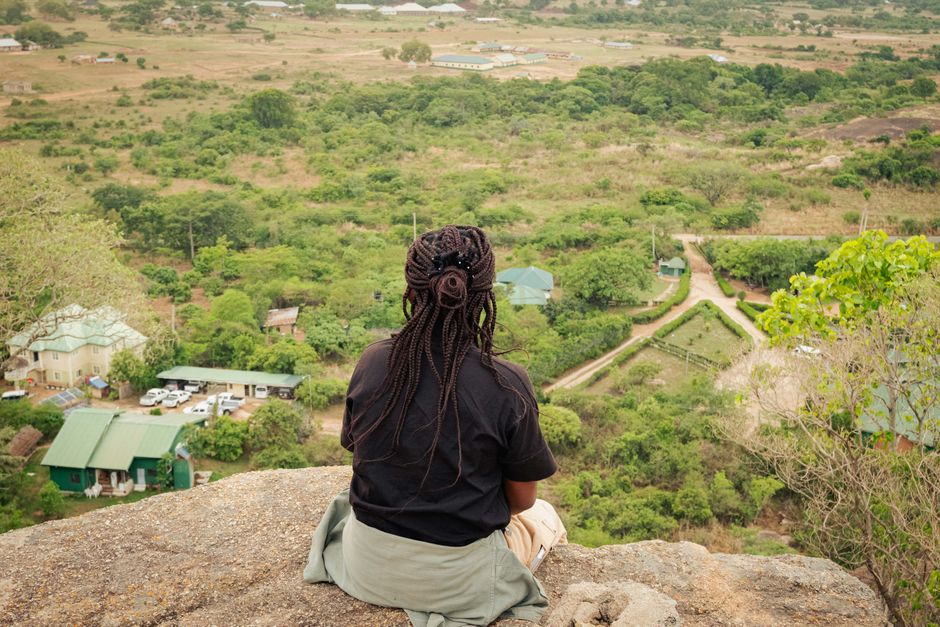
My strongest recommendation is to make the first 24 hours boring. A direct transfer, one confirmed room, and a short daytime walk give you time to learn the city before adding nightlife, remote hikes, or overnight buses.
| Travel situation | Lower-risk choice | Control to use |
|---|---|---|
| Airport arrival | Official airport taxi, pre-booked transfer, or recognized ride app | Confirm the driver, plate, and destination before entering |
| Urban sightseeing | Busy routes during daylight | Keep your phone away between navigation checks |
| Night transport | Door-to-door ride arranged by the hotel or trusted app | Share the trip and wait inside until the car arrives |
| Intercity bus | Reputable operator with a fixed ticket and assigned seat | Keep passport, phone, and cash on your body |
| Remote excursion | Known guide, registered tour, or established lodge | Leave the route and return time with someone else |
| Border crossing | Daytime crossing with documents and onward transport ready | Do not accept unofficial help with immigration or money |
Use a two-layer money plan
Carry one small daily wallet and keep your reserve money, spare card, and passport copy somewhere separate. Store the original passport in a locked accommodation safe when local rules allow it, but carry it when a carrier, border official, or venue legally requires identification. Never place every payment method in one purse.
Choose accommodation for control, not just price
The cheapest room is a poor bargain if its entrance is isolated or its reception closes before you return. For solo trips, I would choose a well-reviewed property with controlled entry, clear check-in procedures, and recent comments about the surrounding streets. Ask for a room away from a ground-floor public entrance, and do not announce your room number where strangers can hear.
Carry tools that solve a real failure
Buy backup power before buying clever safety gadgets. A working phone supports maps, translation, banking, transport, and emergency calls. Devices help only when you know their limits and can reach them quickly.
For a dead phone, choose a simple power bank
The Anker 323 Power Bank has a 10,000mAh capacity, 37Wh rating, and 5V/2.4A output according to Anker’s product guide. It is a practical size for a city day, but it does not replace a wall charger, cable, or second payment method. Charge both the phone and the bank before a long transfer, and keep the cable in the same small pouch so you can reach it without opening your main bag in a crowd.
For remote terrain, choose communication rather than tracking alone
The Garmin inReach Mini 2 weighs about 3.5 ounces, carries an IPX7 water rating, and offers two-way satellite messaging and SOS through an active subscription. Garmin’s published specifications describe up to 14 days of battery life with 10-minute tracking under suitable conditions, or up to 30 days with 30-minute tracking and a clear sky. Garmin announced a $399.99 suggested retail price, but device and plan prices change, so verify them before departure.
This is the best choice for a remote trek where cellular service may disappear. It is unnecessary for a short city break, and it cannot summon help instantly in every location. Learn how to send a test message, save emergency contacts, and explain your route before relying on it.
Use an item tracker for luggage, never for a person
An Apple AirTag costs $29 for a one-pack in Apple’s U.S. store and uses a replaceable CR2032 coin battery. Put it inside checked luggage or a day bag, then keep tracking notifications enabled. It is not a live GPS beacon, does not protect you from theft, and should never be used to track another person without consent. Apple states that unwanted tracking alerts work across supported iPhone, iPad, and Android devices; an alert should be treated as a personal safety issue, not ignored.
Handle harassment, theft, and drink spiking without freezing
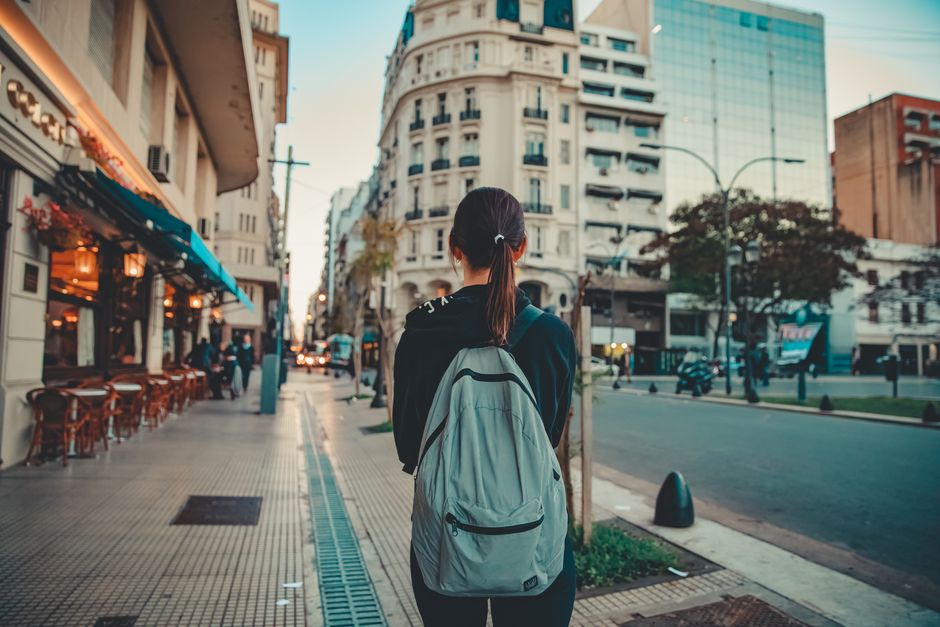
If someone follows or corners you
- Move toward people, light, cameras, a hotel desk, a staffed shop, or public transit personnel.
- Do not lead a stranger to your accommodation. Change direction and enter a safe business instead.
- Use a firm phrase in the local language, such as asking for help or saying that you are calling the police.
- Call a trusted contact while walking into a public place, and give the location rather than trying to explain the whole story.
You do not owe politeness to someone who ignores your boundary. A loud, direct response can draw attention, but the safest response depends on the setting. If the person has a weapon or a group, prioritize distance and witnesses over proving a point.
If a robbery begins
Do not fight over a phone, bag, or wallet. Keep your hands visible, move slowly, and hand over property if the robber demands it. Your passport and bank cards can be replaced; a confrontation can turn a theft into serious violence. Once safe, block cards, contact your insurer, record what happened, and report it to local police if doing so is safe and useful for replacement documents.
If a drink tastes strange or your memory becomes unclear
Leave with someone you trust, a venue worker, or security staff. Do not go to a private room with a new acquaintance. Ask for medical help if you feel confused, unusually sleepy, sick, or unable to walk normally. Preserve the drink or clothing only if doing so does not delay urgent care. You can decide about reporting after you are safe. The U.S. Department of State lists drink spiking and violence against women among risks travelers should plan for, but no checklist can predict every incident.
Common mistakes include leaving a drink unattended, sharing a room number publicly, accepting an unplanned lift, and assuming a crowded place is automatically safe. Confidence is useful; a backup route is better.
What should you do if the plan breaks?
What if your phone or wallet disappears?
Go to a staffed location and ask for help before searching alone. Use your offline document copy to identify your bank, insurer, accommodation, and consulate contacts. Freeze cards through the bank’s official number, not a message sent by a stranger. If your passport is missing, contact your embassy or consulate for replacement instructions and avoid paying anyone who promises to speed up the process.
What if you feel unsafe in your accommodation?
Leave the room with your essential documents and go to reception, a public lobby, or another reputable property. Tell a trusted person exactly where you are. If staff dismiss a credible concern, arrange a new room or accommodation rather than staying to avoid losing a deposit. A booking can be changed; a private room is not a secure plan if the entrance, lock, or staff response feels wrong.
What if local rules conflict with advice from home?
The law of the country you are visiting generally controls conduct within that territory, and emergency numbers differ across South America. Check local instructions, follow lawful directions, and ask your embassy or consulate for consular guidance. This article does not analyze any particular U.S. state law. This is not legal advice — consult a licensed attorney.
Solo travel becomes safer when preparation leaves room for curiosity. The goal is not to move through South America suspicious of everyone; it is to make the first decision clear when tired, distracted, or far from home.